Gladys Assistant OS: install Gladys on a mini-PC from a USB drive
· 4 min read

Hey everyone,
Today I'm releasing Gladys Assistant OS, the new official way to install Gladys on a mini-PC 🎉
Hey everyone,
Today I'm releasing Gladys Assistant OS, the new official way to install Gladys on a mini-PC 🎉
Hey everyone!
New version of Gladys today, 5.3 🎉
Three things in this one. The music widget becomes a real player: the artwork, the title, the progress, the queue, and a search to start an album or a playlist. The assistant can now run on the AI of your choice, a model running at home included, instead of Gladys Plus. And the voice too: scene announcements can be spoken by a local text-to-speech engine.
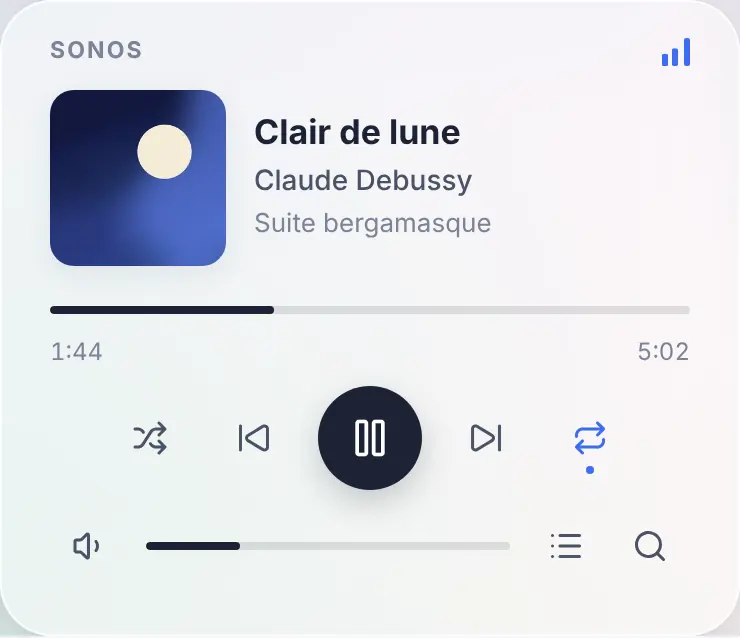
Hey everyone!
New version of Gladys today, 5.2 🎉
Two big pieces in this one, and both are about your home rather than about the interface. Gladys can now be your thermostat, or programme the one you already have, with weekly schedules. And energy tracking opens up to every electricity contract: not just the three French ones Gladys knew until now, but time-of-use rates, seasons, tiers, spot prices, from almost any country.
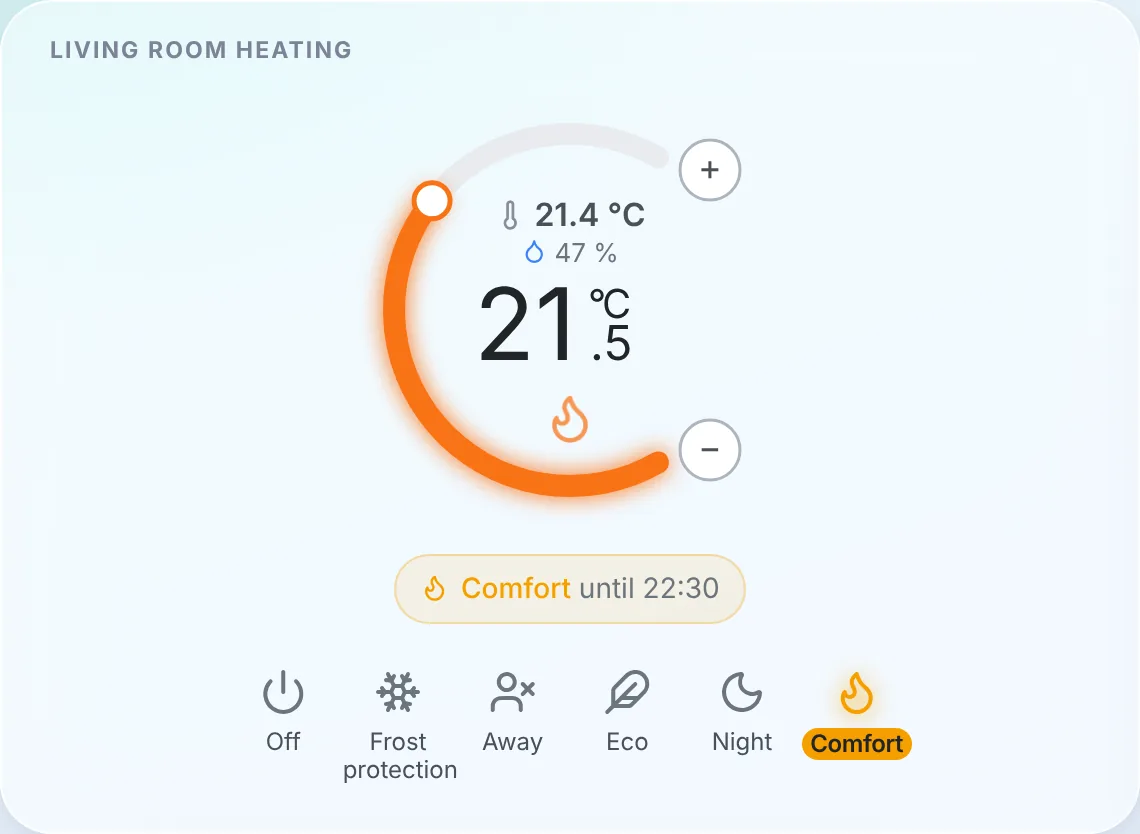
Hey everyone!
New version of Gladys today, 5.1 🎉
Version 5 was a big interface redesign. This one is mostly for integrations. Until now, a community integration could do exactly one thing: publish devices. It can now put its own widgets on your dashboard, and add its own triggers and actions to your scenes.
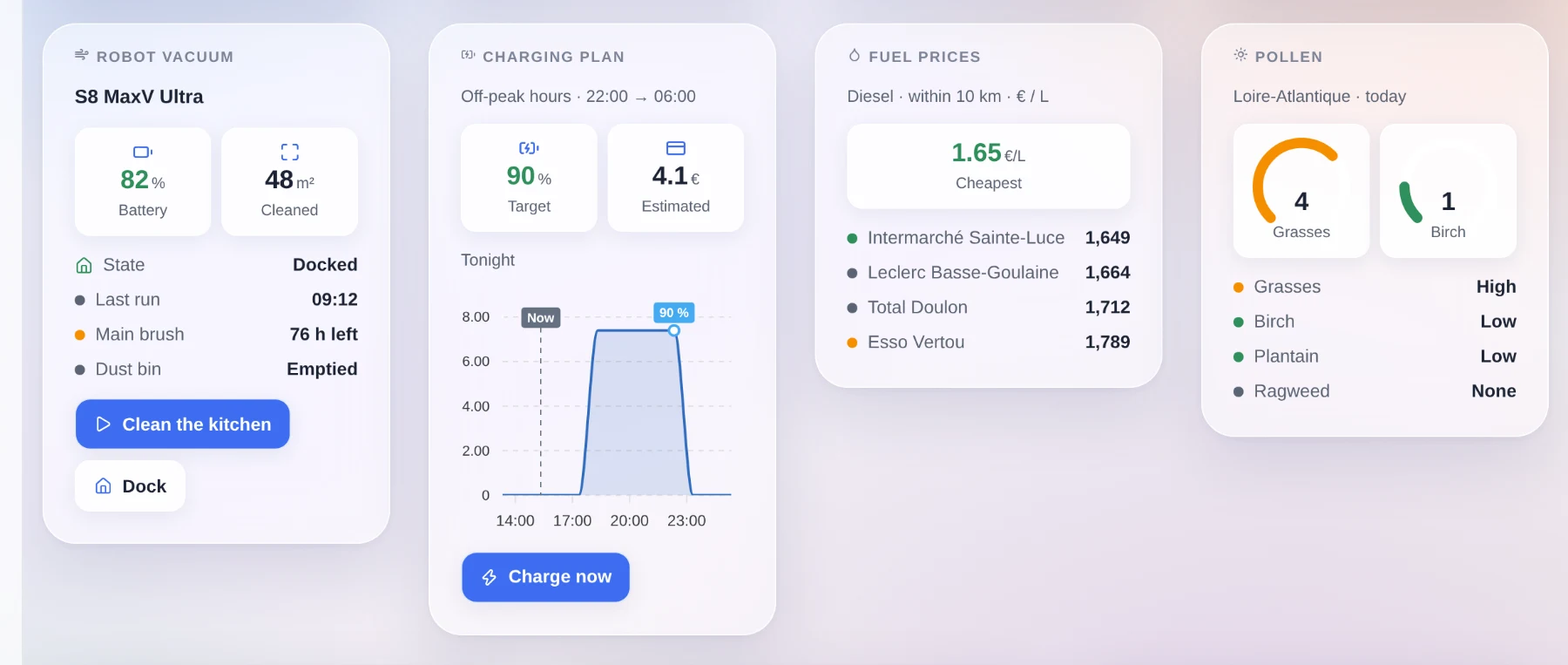
Hey everyone!
Gladys Assistant 5 is out. 🎉
This is the first major version of Gladys in almost six years, and it is the one I have wanted to ship for a very long time: a complete redesign of the interface, from the dashboard to the last settings page.
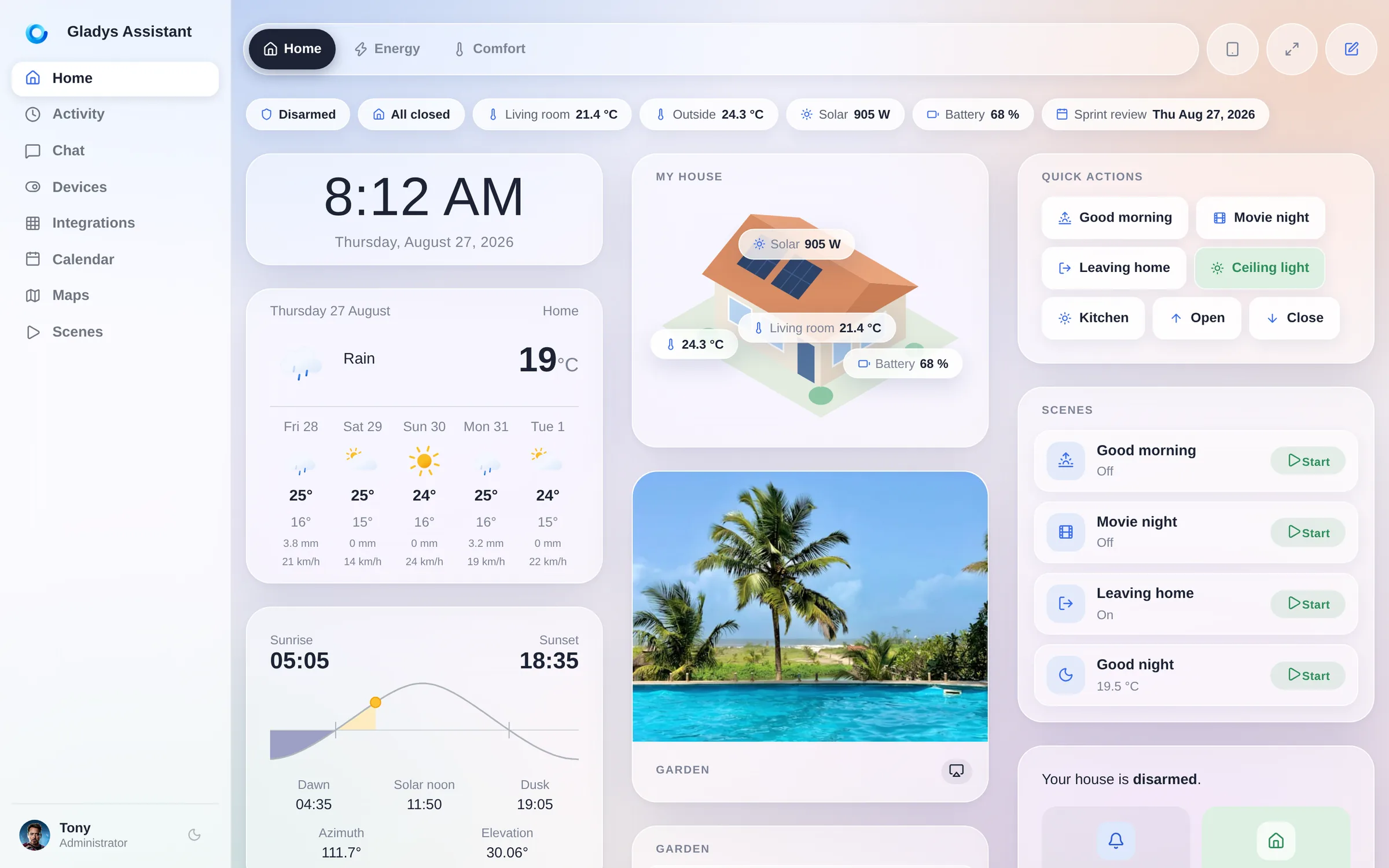
Hey everyone!
Version 4.86.0 is out, and this one is simple to describe: it's the biggest release in the history of the project. 🚀
The numbers speak for themselves. In 7 days, we merged 68 pull requests, touching more than 1,000 files and adding around 28,000 lines of code. For comparison, our biggest releases used to top out at 35 pull requests, over two weeks. We just did twice that, in half the time.
And this isn't a one-off spike. Every single week, we blow up the productivity of this project a bit more, and the reason is no secret: AI. Out of the 68 pull requests in this release, 62 were co-authored with Claude. Specs, implementation, tests, code review, even the CI that fixes its own failures: AI is now everywhere in the Gladys development loop, and the result is a pace this project has simply never seen before.
👉 You can follow that pace live, day by day, on the development activity page. Commits, contributors, streaks: everything is there, updated automatically.
Now, let's look at what actually landed in your home.
Hey everyone!
Version 4.84.0 is out, and it's probably the most important release in the history of the project. 🚀
For 6 years, we patiently built 36 integrations inside the Gladys core. Each one required a pull request, a review, tests, and a lot of my time. That was the bottleneck of the project.
Today, that bottleneck is gone. With external integrations, anyone can build and publish a Gladys integration, without asking my permission. The result came fast: 20 integrations are already available, built in a few days by 6 different contributors.
In other words: in a few days, the community produced more than half of what we had achieved in 6 years. This is a step change for the project.
Hey everyone!
Version 4.83.0 is available! After the major 4.82 release (Activity journal + MQTT), this version focuses on reliability, performance, and a few very concrete daily improvements — especially for installations with a lot of history, and for Gladys Plus.
Hey everyone!
Today I'm releasing what is, so far, one of the biggest releases of the year, and there's a real reason for that.
We're clearly at a turning point in the way software gets built: AI models keep getting more powerful, and the tools to use them day to day are finally becoming mature. Over the past two weeks, two of them changed the way I work on Gladys.
Claude Fable 5, Anthropic's flagship model, the one that was temporarily restricted in the United States because its capabilities worried the authorities. It let me tackle very technical topics that would have taken me entire days, and build major features like the Activity journal I detail below.
Cursor's cloud AI agents, controllable from mobile. About ten days ago, Cursor launched its iOS app: you can now hand a development task to an agent straight from your phone, and let it work autonomously, without a computer. The complete redesign of the MQTT integration was done entirely by a Cursor agent while I was travelling.
Hey everyone!
Version 4.81 is here 😀 This release brings rolling shutter control to the AI agent and Alexa, a new AI quota display, several Zigbee2MQTT improvements, and a bunch of fixes.